> For the complete documentation index, see [llms.txt](https://docs.openjourneybot.com/llms.txt). Markdown versions of documentation pages are available by appending `.md` to page URLs; this page is available as [Markdown](https://docs.openjourneybot.com/controlnet.md).

# Controlnet

### Parameters

* <mark style="color:purple;">Image</mark>
* [<mark style="color:purple;">Prompt</mark>](#prompt)
* [<mark style="color:purple;">Negative Prompt</mark>](#negative-prompt)
* [<mark style="color:purple;">Seed</mark>](#seed)

#### Image

> Add your sketch art image link or the premade image that you want to transform

#### Prompt

> Add your prompt to generate art whatever you desire to generate. Output quality completely depends on your creativity on your prompt

#### Negative Prompt

> Add anything that you don't want on your generate. This will eliminates unnecessary stuff being generate on your art.

#### Seed

> Openjourney uses a seed number to create a field of visual noise, like television static, as a starting point to generate the initial image grids. Seed numbers are generated randomly for each image but can be specified with this option. ( This must be a number )

### Here are some of the examples:

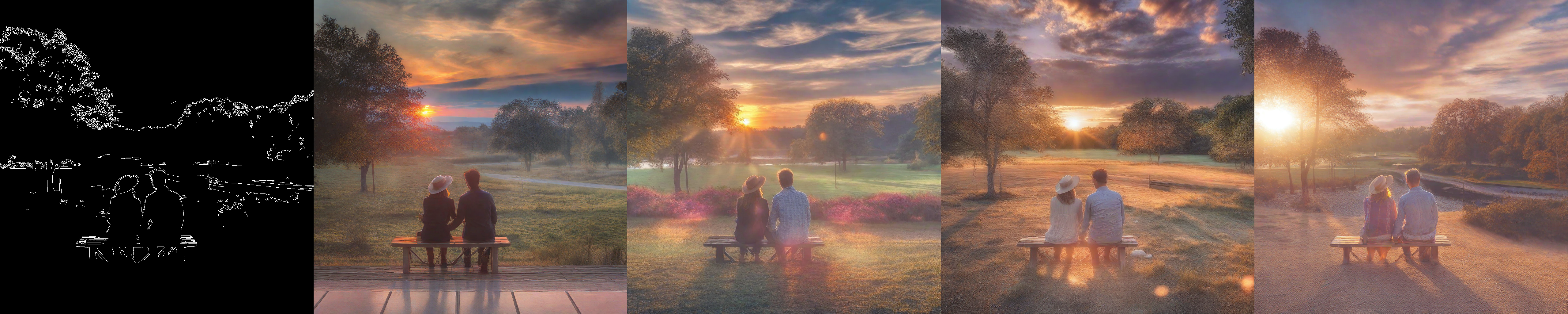
> **Prompt:** a couple watching a romantic sunset, 4k photo

<figure><img src="https://huggingface.co/diffusers/controlnet-canny-sdxl-1.0/resolve/main/out_couple.png" alt=""><figcaption><p>Here is the Transformation process from Sketch to generated Image</p></figcaption></figure>

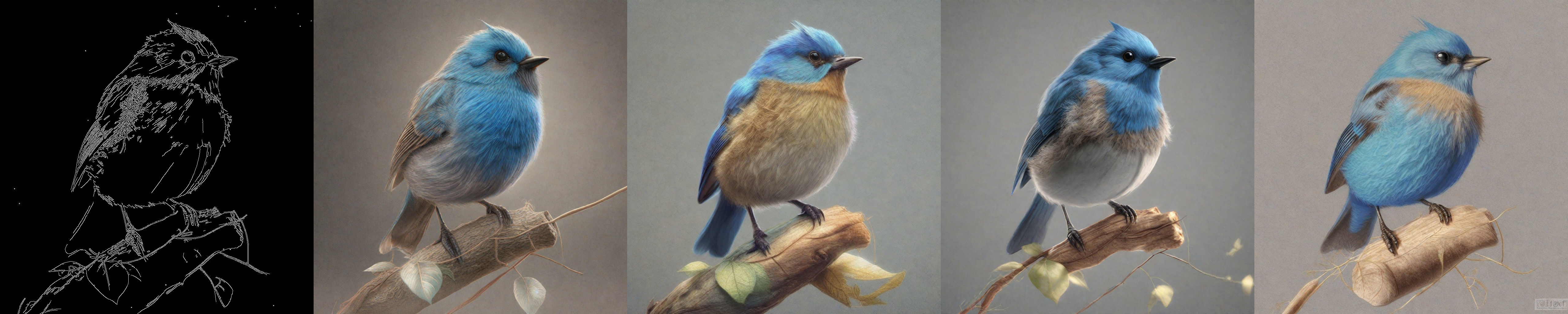
> **Prompt:** ultrarealistic shot of a furry blue bird

<figure><img src="https://huggingface.co/diffusers/controlnet-canny-sdxl-1.0/resolve/main/out_bird.png" alt=""><figcaption><p>Here is the Transformation process from Sketch to generated Image</p></figcaption></figure>

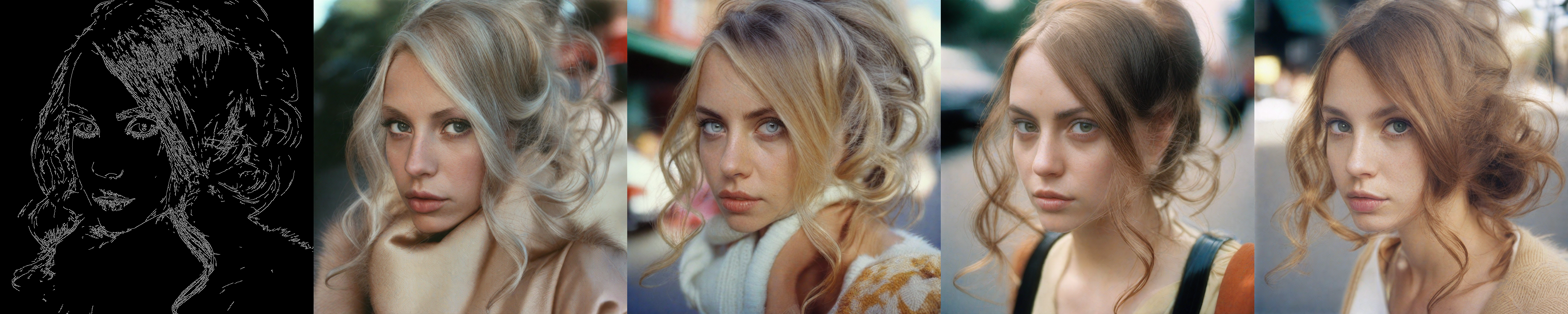
> **Prompt:** a woman, close up, detailed, beautiful, street photography, photorealistic, detailed, Kodak ektar 100, natural, candid shot

<figure><img src="https://huggingface.co/diffusers/controlnet-canny-sdxl-1.0/resolve/main/out_women.png" alt=""><figcaption><p>Here is the Transformation process from Sketch to generated Image</p></figcaption></figure>

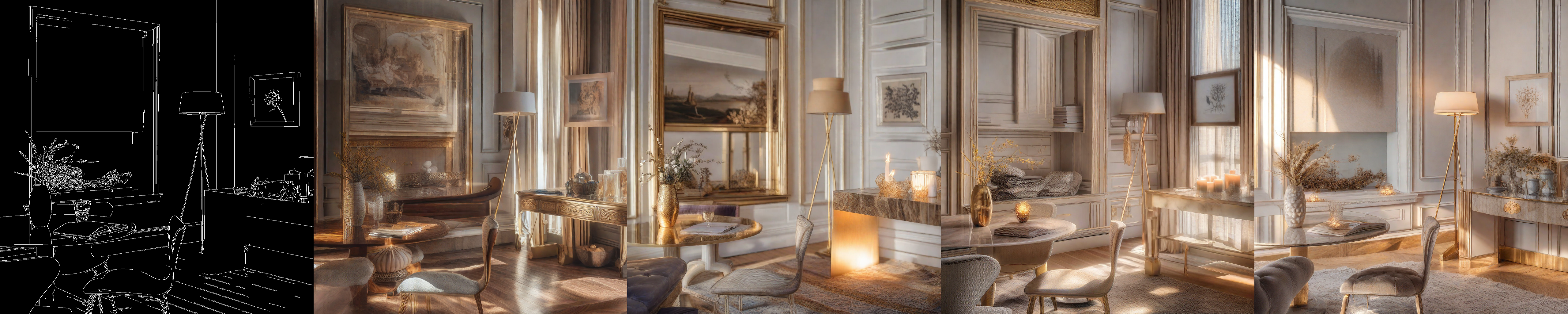
> **Prompt:** Cinematic, neoclassical table in the living room, cinematic, contour, lighting, highly detailed, winter, golden hour

<figure><img src="https://huggingface.co/diffusers/controlnet-canny-sdxl-1.0/resolve/main/out_room.png" alt=""><figcaption><p>Here is the Transformation process from Sketch to generated Image</p></figcaption></figure>

{% hint style="info" %}
We hope you had a basic understanding of the image generation parameters and how to use them from the [Image Generation](/image-generation.md) section.&#x20;
{% endhint %}


---

# Agent Instructions
This documentation is published with GitBook. GitBook is the documentation platform designed so that both humans and AI agents can read, navigate, and reason over technical content effectively. Learn more at gitbook.com.

## Querying This Documentation
If you need additional information that is not directly available in this page, you can query the documentation dynamically by asking a question.

Perform an HTTP GET request on the current page URL with the `ask` query parameter, and the optional `goal` query parameter:

```
GET https://docs.openjourneybot.com/controlnet.md?ask=<question>&goal=<endgoal>
```

`ask` is the immediate question: it should be specific, self-contained, and written in natural language.
`goal` is optional and describes the broader end goal you are ultimately trying to accomplish on behalf of the user. GitBook uses it to tailor the answer towards what is most useful for that goal.

The response will contain a direct answer to the question and relevant excerpts and sources from the documentation.

Use this mechanism when the answer is not explicitly present in the current page, you need clarification or additional context, or you want to retrieve related documentation sections.